Research interests
Cell-cell communication in lung inflammation and sepsis (macrophage-epithelial gap junctions)[9]
All India Institute of Medical Sciences, New Delhi
Completed 1968 · Last known relationship
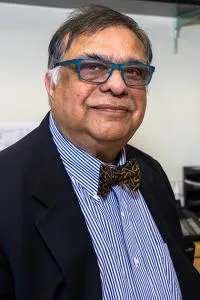
Jahar Bhattacharya is Professor of Medicine and of Physiology & Cellular Biophysics at Columbia, Director of Lung Research for the Division of Pulmonary, Allergy and Critical Care Medicine, director of the Lung Biology Laboratory and program director of the division's NHLBI T32 training grant in lung science. He graduated in medicine from AIIMS New Delhi (1968), went to Oxford as a Rhodes Scholar for an MSc and DPhil (1976) after a cardiology residency at the Radcliffe Infirmary, and did postdoctoral work at UCSF's Cardiovascular Research Institute. His lab pioneered real-time optical imaging of intact lungs and has used it to show mitochondrial transfer from stromal cells to alveolar epithelium (Nature Medicine 2012), connexin-43 gap-junction signaling between sessile alveolar macrophages and epithelium (Nature 2014), and more recently mitochondrial calcium uniporter control of surfactant secretion and macrophage-targeted therapy for ventilator-induced lung injury; he has patented a biologic being tested preclinically for ARDS. His lab has held uninterrupted NIH funding for more than 35 years, including R01 HL036024 (continuously since 1985), an NIH MERIT award and current R01 HL169515, and he has mentored more than 45 investigators. He is a past Chair of the ATS Pulmonary Circulation Assembly and has received the ATS Recognition Award for Scientific Accomplishments, the APS Comroe Lecture and the 2019 ATS Amberson Lecture.
Each topic is linked to its supporting source in Sources.
Training includes Oxford University, All India Institute of Medical Sciences, New Delhi, Professor of Medicine at Columbia University Irving Medical Center, and Director of Lung Research, Division of Pulmonary, Allergy and Critical Care Medicine; directs the PACC T32 training program, plus 7 more records.
Explore education and trainingCompleted 1976
Completed 1973
Completed 1968
Cell-cell communication in lung inflammation and sepsis (macrophage-epithelial gap junctions)[9]
Cytoskeletal therapy (actin fence therapy, cell-penetrating peptides) and a patented biologic for ARDS[9]
Molecular mechanisms underlying acute lung injury (ALI) and ARDS[9]
Real-time optical imaging of live lungs (single- and two-photon microscopy)[10]
Regulation of alveolar surfactant secretion; formation and clearance of alveolar wall liquid[9]
Regulation of lung microvascular barrier properties in inflammation and sepsis; barrier regulation[9]
Role of mitochondria (mitochondrial transfer, mitochondrial Ca2+ buffering)[9]