Undergraduate education
Sichuan University (Physics)[1]
Through 1980

Professor
UT Southwestern Medical Center · Date not established · Last known relationship
His research uses integrative physiology, neuroimaging, and randomized trials to examine how exercise, cardiovascular risk reduction, diet, sleep, arterial stiffness, and blood-pressure rhythms affect brain perfusion, structure, function, aging, and Alzheimer's disease.
Rong Zhang is a professor with a primary appointment in neurology and a secondary appointment in internal medicine, and directs the Cerebrovascular Laboratory at the Institute for Exercise and Environmental Medicine. His research examines cerebral blood-flow regulation, exercise, vascular risk, brain aging, and Alzheimer's disease.
Zhang trained in physics, aerospace physiology, space medicine, and exercise physiology. His work developed methods for assessing dynamic cerebrovascular function and studies autonomic regulation of cerebral blood flow.
Alzheimer's disease · Biomedical signal processing · Brain aging · Brain perfusion · Cardiovascular risk reduction · Cerebral blood-flow regulation · Exercise physiology · Neuroimaging
Reviewed sources document Undergraduate education: Sichuan University (Physics), Graduate education: Xian Fourth Military Med Univ, Graduate education: Xian Fourth Military Med Univ (Physiology), and Education record: UT Southwestern Medical Center (Space Medicine/Exercise Physiology).
Explore education and trainingReviewed sources document Alzheimer's disease, Biomedical signal processing, Brain aging, and Brain perfusion, plus 4 more research items. Explore attributed publications and research affiliations.
Explore researchDated relationships supported by published source records. Inferred dates are labeled.
Date not established
UT Southwestern Medical Center
UT Southwestern Division of Cardiology faculty directorySichuan University (Physics)[1]
Through 1980
Xian Fourth Military Med Univ[1]
Through 1993
Xian Fourth Military Med Univ (Physiology)[1]
Through 1987
Professor[2]
UT Southwestern Medical Center (Space Medicine/Exercise Physiology)[1]
Alzheimer's disease[1]
Biomedical signal processing[1]
Brain aging[1]
Brain perfusion[1]
Cardiovascular risk reduction[1]
Cerebral blood-flow regulation[1]
Exercise physiology[1]
Neuroimaging[1]
Sources are listed once and connected to each accepted claim they support. Excerpts preserve the source language used in the review.
17 source claims · Reviewed Sep 7, 2026
Biographical context: His research uses integrative physiology, neuroimaging, and randomized trials to examine how exercise, cardiovascular risk reduction, diet, sleep, arterial stiffness, and blood-pressure rhythms affect brain perfusion, structure, function, aging, and Alzheimer's disease.
Biography Joined UT Southwestern: Internal Medicine - 1997 | Neurology - 2011 Rong Zhang, Ph.D., holds a primary appointment within the Department of Neurology and a Secondary appointment in Internal Medicine. He serves as Director of the Cerebrovascular Laboratory at the Institute for Exercise and Environmental Medicine at Texas Health Presbyterian Hospital Dallas, which is affiliated with UT Southwestern. Dr. Zhang is an internationally recognized expert in the study of cerebrovascular function and the impact of exercise training on brain aging and Alzheimer’s disease. Research: Dr. Zhang is interested in the mathematical modeling of cerebral blood flow regulation. The methods he developed to assess dynamic cerebrovascular function have been used by many labs around the world. His research, supported by the American Heart Association, has demonstrated the important role of autonomic neural activity in the regulation of cerebral blood flow in human subjects. His NIH-supported research has demonstrated that aerobic exercise training reduces central arterial stiffness and improves brain perfusion and white matter integrity measured by MRI diffusion tensor imaging (DTI) in older adults. Furthermore, alterations in arterial stiffness and blood pressure circadian rhythm are associated with brain amyloid deposition measured by positron emission tomography (PET). These findings provide important insights into the impact of exercise training/physical activity on cardiovascular and brain plasticity and reveal the intrinsic interrelationship between cardiovascular and brain health. He leads a multidisciplinary team to conduct integrative physiological studies and randomized controlled trials to answer the key questions if, and to what extent, reducing cardiovascular risk factors, dietary interventions, sleep, and exercise impact brain structure, function, and perfusion with the ultimate goal to improve brain health and quality-of-life in middle-aged and older adults. Dr. Zhang also has a strong research interest in understanding the molecular and cellular mechanisms by which the brain responds to lifestyle changes. Dr. Zhang has published more than 150 peer-reviewed research articles, reviews, and technical papers. His research has been highlighted by Time magazine, Forbes, and CNN. Special Roles: Dr. Zhang has served regularly as grant reviewer for the NIH, the Alzheimer’s Association, and the Research Councils of Canada, the UK, New Zealand, and the Netherlands since 2004. Background: Dr. Zhang received his undergraduate education in Physics at Sichuan University and his M.S. and Ph.D. degrees in Aerospace Physiology at The Fourth Military Medical University in China. He completed his post-doctoral training in Space Medicine/Exercise Physiology with Benjamin Levine, M.D. at UT Southwestern.
Biographical context: Rong Zhang is a professor with a primary appointment in neurology and a secondary appointment in internal medicine, and directs the Cerebrovascular Laboratory at the Institute for Exercise and Environmental Medicine. His research examines cerebral blood-flow regulation, exercise, vascular risk, brain aging, and Alzheimer's disease.
Biography Joined UT Southwestern: Internal Medicine - 1997 | Neurology - 2011 Rong Zhang, Ph.D., holds a primary appointment within the Department of Neurology and a Secondary appointment in Internal Medicine. He serves as Director of the Cerebrovascular Laboratory at the Institute for Exercise and Environmental Medicine at Texas Health Presbyterian Hospital Dallas, which is affiliated with UT Southwestern. Dr. Zhang is an internationally recognized expert in the study of cerebrovascular function and the impact of exercise training on brain aging and Alzheimer’s disease. Research: Dr. Zhang is interested in the mathematical modeling of cerebral blood flow regulation. The methods he developed to assess dynamic cerebrovascular function have been used by many labs around the world. His research, supported by the American Heart Association, has demonstrated the important role of autonomic neural activity in the regulation of cerebral blood flow in human subjects. His NIH-supported research has demonstrated that aerobic exercise training reduces central arterial stiffness and improves brain perfusion and white matter integrity measured by MRI diffusion tensor imaging (DTI) in older adults. Furthermore, alterations in arterial stiffness and blood pressure circadian rhythm are associated with brain amyloid deposition measured by positron emission tomography (PET). These findings provide important insights into the impact of exercise training/physical activity on cardiovascular and brain plasticity and reveal the intrinsic interrelationship between cardiovascular and brain health. He leads a multidisciplinary team to conduct integrative physiological studies and randomized controlled trials to answer the key questions if, and to what extent, reducing cardiovascular risk factors, dietary interventions, sleep, and exercise impact brain structure, function, and perfusion with the ultimate goal to improve brain health and quality-of-life in middle-aged and older adults. Dr. Zhang also has a strong research interest in understanding the molecular and cellular mechanisms by which the brain responds to lifestyle changes. Dr. Zhang has published more than 150 peer-reviewed research articles, reviews, and technical papers. His research has been highlighted by Time magazine, Forbes, and CNN. Special Roles: Dr. Zhang has served regularly as grant reviewer for the NIH, the Alzheimer’s Association, and the Research Councils of Canada, the UK, New Zealand, and the Netherlands since 2004. Background: Dr. Zhang received his undergraduate education in Physics at Sichuan University and his M.S. and Ph.D. degrees in Aerospace Physiology at The Fourth Military Medical University in China. He completed his post-doctoral training in Space Medicine/Exercise Physiology with Benjamin Levine, M.D. at UT Southwestern.
Biographical context: Zhang trained in physics, aerospace physiology, space medicine, and exercise physiology. His work developed methods for assessing dynamic cerebrovascular function and studies autonomic regulation of cerebral blood flow.
Biography Joined UT Southwestern: Internal Medicine - 1997 | Neurology - 2011 Rong Zhang, Ph.D., holds a primary appointment within the Department of Neurology and a Secondary appointment in Internal Medicine. He serves as Director of the Cerebrovascular Laboratory at the Institute for Exercise and Environmental Medicine at Texas Health Presbyterian Hospital Dallas, which is affiliated with UT Southwestern. Dr. Zhang is an internationally recognized expert in the study of cerebrovascular function and the impact of exercise training on brain aging and Alzheimer’s disease. Research: Dr. Zhang is interested in the mathematical modeling of cerebral blood flow regulation. The methods he developed to assess dynamic cerebrovascular function have been used by many labs around the world. His research, supported by the American Heart Association, has demonstrated the important role of autonomic neural activity in the regulation of cerebral blood flow in human subjects. His NIH-supported research has demonstrated that aerobic exercise training reduces central arterial stiffness and improves brain perfusion and white matter integrity measured by MRI diffusion tensor imaging (DTI) in older adults. Furthermore, alterations in arterial stiffness and blood pressure circadian rhythm are associated with brain amyloid deposition measured by positron emission tomography (PET). These findings provide important insights into the impact of exercise training/physical activity on cardiovascular and brain plasticity and reveal the intrinsic interrelationship between cardiovascular and brain health. He leads a multidisciplinary team to conduct integrative physiological studies and randomized controlled trials to answer the key questions if, and to what extent, reducing cardiovascular risk factors, dietary interventions, sleep, and exercise impact brain structure, function, and perfusion with the ultimate goal to improve brain health and quality-of-life in middle-aged and older adults. Dr. Zhang also has a strong research interest in understanding the molecular and cellular mechanisms by which the brain responds to lifestyle changes. Dr. Zhang has published more than 150 peer-reviewed research articles, reviews, and technical papers. His research has been highlighted by Time magazine, Forbes, and CNN. Special Roles: Dr. Zhang has served regularly as grant reviewer for the NIH, the Alzheimer’s Association, and the Research Councils of Canada, the UK, New Zealand, and the Netherlands since 2004. Background: Dr. Zhang received his undergraduate education in Physics at Sichuan University and his M.S. and Ph.D. degrees in Aerospace Physiology at The Fourth Military Medical University in China. He completed his post-doctoral training in Space Medicine/Exercise Physiology with Benjamin Levine, M.D. at UT Southwestern.
Education record: UT Southwestern Medical Center (Space Medicine/Exercise Physiology)
Biography Joined UT Southwestern: Internal Medicine - 1997 | Neurology - 2011 Rong Zhang, Ph.D., holds a primary appointment within the Department of Neurology and a Secondary appointment in Internal Medicine. He serves as Director of the Cerebrovascular Laboratory at the Institute for Exercise and Environmental Medicine at Texas Health Presbyterian Hospital Dallas, which is affiliated with UT Southwestern. Dr. Zhang is an internationally recognized expert in the study of cerebrovascular function and the impact of exercise training on brain aging and Alzheimer’s disease. Research: Dr. Zhang is interested in the mathematical modeling of cerebral blood flow regulation. The methods he developed to assess dynamic cerebrovascular function have been used by many labs around the world. His research, supported by the American Heart Association, has demonstrated the important role of autonomic neural activity in the regulation of cerebral blood flow in human subjects. His NIH-supported research has demonstrated that aerobic exercise training reduces central arterial stiffness and improves brain perfusion and white matter integrity measured by MRI diffusion tensor imaging (DTI) in older adults. Furthermore, alterations in arterial stiffness and blood pressure circadian rhythm are associated with brain amyloid deposition measured by positron emission tomography (PET). These findings provide important insights into the impact of exercise training/physical activity on cardiovascular and brain plasticity and reveal the intrinsic interrelationship between cardiovascular and brain health. He leads a multidisciplinary team to conduct integrative physiological studies and randomized controlled trials to answer the key questions if, and to what extent, reducing cardiovascular risk factors, dietary interventions, sleep, and exercise impact brain structure, function, and perfusion with the ultimate goal to improve brain health and quality-of-life in middle-aged and older adults. Dr. Zhang also has a strong research interest in understanding the molecular and cellular mechanisms by which the brain responds to lifestyle changes. Dr. Zhang has published more than 150 peer-reviewed research articles, reviews, and technical papers. His research has been highlighted by Time magazine, Forbes, and CNN. Special Roles: Dr. Zhang has served regularly as grant reviewer for the NIH, the Alzheimer’s Association, and the Research Councils of Canada, the UK, New Zealand, and the Netherlands since 2004. Background: Dr. Zhang received his undergraduate education in Physics at Sichuan University and his M.S. and Ph.D. degrees in Aerospace Physiology at The Fourth Military Medical University in China. He completed his post-doctoral training in Space Medicine/Exercise Physiology with Benjamin Levine, M.D. at UT Southwestern.
Graduate education: Xian Fourth Military Med Univ
Through 1993
Education Undergraduate Sichuan University (1980), Physics Graduate School Xian Fourth Military Med Univ (1987), Physiology Graduate School Xian Fourth Military Med Univ (1993)
Graduate education: Xian Fourth Military Med Univ (Physiology)
Through 1987
Education Undergraduate Sichuan University (1980), Physics Graduate School Xian Fourth Military Med Univ (1987), Physiology Graduate School Xian Fourth Military Med Univ (1993)
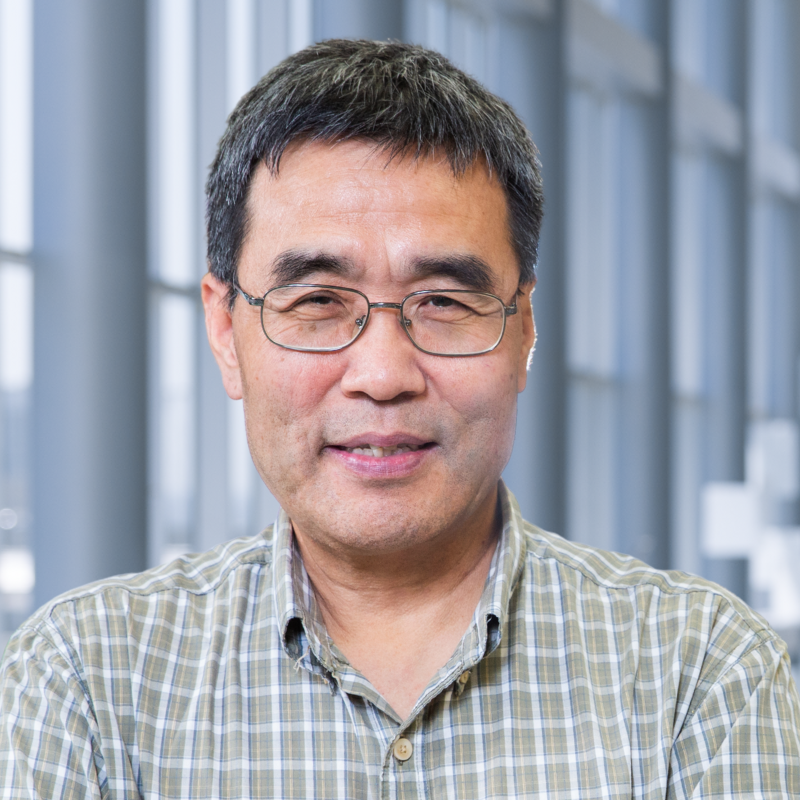
Official headshot: Portrait
<img src="https://profileplus.swmed.edu/facultydata/18315/images/zhang-rong-inset.png" class="card__image" itemprop="image" alt="Rong Zhang, Ph.D. " style="max-width:200px;" />
Official profile: Official profile
Biography Joined UT Southwestern: Internal Medicine - 1997 | Neurology - 2011 Rong Zhang, Ph.D., holds a primary appointment within the Department of Neurology and a Secondary appointment in Internal Medicine. He serves as Director of the Cerebrovascular Laboratory at the Institute for Exercise and Environmental Medicine at Texas Health Presbyterian Hospital Dallas, which is affiliated with UT Southwestern. Dr. Zhang is an internationally recognized expert in the study of cerebrovascular function and the impact of exercise training on brain aging and Alzheimer’s disease. Research: Dr. Zhang is interested in the mathematical modeling of cerebral blood flow regulation. The methods he developed to assess dynamic cerebrovascular function have been used by many labs around the world. His research, supported by the American Heart Association, has demonstrated the important role of autonomic neural activity in the regulation of cerebral blood flow in human subjects. His NIH-supported research has demonstrated that aerobic exercise training reduces central arterial stiffness and improves brain perfusion and white matter integrity measured by MRI diffusion tensor imaging (DTI) in older adults. Furthermore, alterations in arterial stiffness and blood pressure circadian rhythm are associated with brain amyloid deposition measured by positron emission tomography (PET). These findings provide important insights into the impact of exercise training/physical activity on cardiovascular and brain plasticity and reveal the intrinsic interrelationship between cardiovascular and brain health. He leads a multidisciplinary team to conduct integrative physiological studies and randomized controlled trials to answer the key questions if, and to what extent, reducing cardiovascular risk factors, dietary interventions, sleep, and exercise impact brain structure, function, and perfusion with the ultimate goal to improve brain health and quality-of-life in middle-aged and older adults. Dr. Zhang also has a strong research interest in understanding the molecular and cellular mechanisms by which the brain responds to lifestyle changes. Dr. Zhang has published more than 150 peer-reviewed research articles, reviews, and technical papers. His research has been highlighted by Time magazine, Forbes, and CNN. Special Roles: Dr. Zhang has served regularly as grant reviewer for the NIH, the Alzheimer’s Association, and the Research Councils of Canada, the UK, New Zealand, and the Netherlands since 2004. Background: Dr. Zhang received his undergraduate education in Physics at Sichuan University and his M.S. and Ph.D. degrees in Aerospace Physiology at The Fourth Military Medical University in China. He completed his post-doctoral training in Space Medicine/Exercise Physiology with Benjamin Levine, M.D. at UT Southwestern.
Research interests: Alzheimer's disease
Joined UT Southwestern: Internal Medicine - 1997 | Neurology - 2011
Research interests: Biomedical signal processing
Research Interest Brain aging and Alzheimer disease Exercise physiology Mathematical modeling and biomedical signal processing Neuroimaging study of brain perfusion, structure, and function
Research interests: Brain aging
Rong Zhang, Ph.D., holds a primary appointment within the Department of Neurology and a Secondary appointment in Internal Medicine. He serves as Director of the Cerebrovascular Laboratory at the Institute for Exercise and Environmental Medicine at Texas Health Presbyterian Hospital Dallas, which is affiliated with UT Southwestern. Dr. Zhang is an internationally recognized expert in the study of cerebrovascular function and the impact of exercise training on brain aging and Alzheimer’s disease.
Research interests: Brain perfusion
His NIH-supported research has demonstrated that aerobic exercise training reduces central arterial stiffness and improves brain perfusion and white matter integrity measured by MRI diffusion tensor imaging (DTI) in older adults. Furthermore, alterations in arterial stiffness and blood pressure circadian rhythm are associated with brain amyloid deposition measured by positron emission tomography (PET). These findings provide important insights into the impact of exercise training/physical activity on cardiovascular and brain plasticity and reveal the intrinsic interrelationship between cardiovascular and brain health.
Research interests: Cardiovascular risk reduction
Joined UT Southwestern: Internal Medicine - 1997 | Neurology - 2011
Research interests: Cerebral blood-flow regulation
Joined UT Southwestern: Internal Medicine - 1997 | Neurology - 2011
Research interests: Exercise physiology
Background: Dr. Zhang received his undergraduate education in Physics at Sichuan University and his M.S. and Ph.D. degrees in Aerospace Physiology at The Fourth Military Medical University in China. He completed his post-doctoral training in Space Medicine/Exercise Physiology with Benjamin Levine, M.D. at UT Southwestern.
Research interests: Neuroimaging
Research Interest Brain aging and Alzheimer disease Exercise physiology Mathematical modeling and biomedical signal processing Neuroimaging study of brain perfusion, structure, and function
Undergraduate education: Sichuan University (Physics)
Through 1980
Education Undergraduate Sichuan University (1980), Physics Graduate School Xian Fourth Military Med Univ (1987), Physiology Graduate School Xian Fourth Military Med Univ (1993)
1 source claim · Reviewed Sep 7, 2026
Professional role: Professor
Rong Zhang, Ph.D. Professor Neurology, Biomedical Engineering, and Internal Medicine