Research interests
Collaborated with Jonathan Campbell on ubiquitination in glucagon-induced signaling bias and insulin secretion[10]
Ph.D at Oklahoma State University, Stillwater
As of 1998 · Last known relationship
Publication: “An insulin-regulated arrestin domain protein controls hepatic glucagon action.”
Publication: “Editorial: Regulation of hormone and growth factor signalling by ubiquitin and ubiquitin-like protein modifications.”
Publication: “Emerging roles of ubiquitin-specific proteases in the cardiovascular system.”
Publication: “How carvedilol does not activate β2-adrenoceptors.”
Publication: “Inflammation-induced endothelial cell activation and angiogenic sprouting are downmodulated by ubiquitin-specific peptidase 20.”
Publication: “Phosphorylation of USP20 on Ser334 by IRAK1 promotes IL-1β-evoked signaling in vascular smooth muscle cells and vascular inflammation.”
Publication: “Small-molecule modulation of β-arrestins.”
Publication: “The ubiquitination status of the glucagon receptor determines signal bias.”
Publication: “USP20 deletion promotes eccentric cardiac remodeling in response to pressure overload and increases mortality.”
Publication: “β-adrenergic receptor signaling mediated by β-arrestins and its potential role in heart failure.”
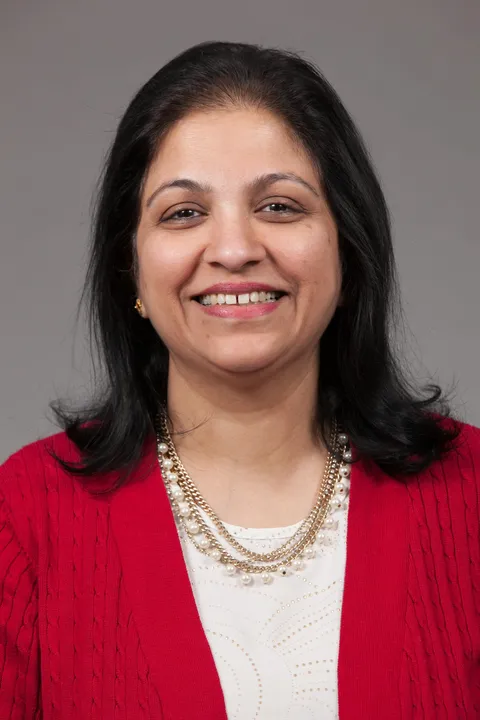
Sudha Kaup Shenoy is a Duke faculty leader whose research connects GPCR signaling, ubiquitination, and cardiovascular disease. She is Professor in Medicine and Cell Biology and a member of the Duke Cancer Institute. After earning a Ph.D. from Oklahoma State University in 1998, she completed postdoctoral training with Robert J. Lefkowitz at Duke. Her postdoctoral work distinguished ubiquitination mechanisms that direct GPCs and β-arrestin toward different trafficking outcomes. Her laboratory studies ubiquitin-code mechanisms in GPCRs and β-arrestins, including USP20 and USP33 regulation of signaling in the heart and vascular endothelium. Her interests also include glucagon-receptor signaling bias, diabetes, cardiac remodeling, and potential therapeutic modulation. She was the first recipient of Duke’s Headley Family Award for cardiovascular research.
Each topic is linked to its supporting source in Sources.
Training includes Ph.D at Oklahoma State University, Stillwater, Associate Professor in Medicine, Assistant Research Professor in Medicine, and NEUROSCI 493: Research Independent Study 1, plus 10 more records.
Explore education and training2031
2031
2030
2026
2026
2025
2024
2021
2020
As of 1998
Collaborated with Jonathan Campbell on ubiquitination in glucagon-induced signaling bias and insulin secretion[10]
Collaborated with Jon Campbell on a Headley Family Award project examining glucagon-receptor ubiquitination as an approach to diabetes treatment[11]
Postdoctoral research discovered distinct roles for ubiquitination of mammalian GPCRs and beta-arrestin[9]
Research on GPCR and beta-arrestin signaling in the heart and vascular endothelium by USP20 and USP33[9]
Research on small-molecule biased allosteric modulators of the glucagon receptor for glucose homeostasis and cardiac function[12]
Research on ubiquitin code mechanisms in GPCRs and beta-arrestins[9]