Research interests
Calcium-dependent signaling pathways and excitation transcription coupling in striated muscle[10]
The Role of Scaffolding Proteins in Muscle
As of 2011 · Last known relationship
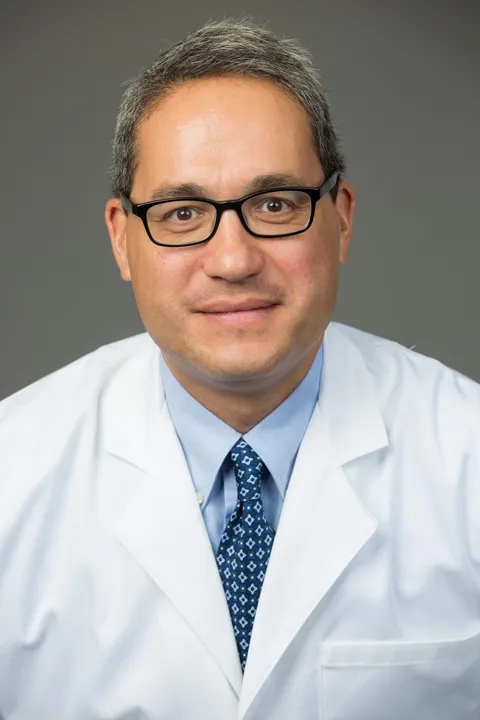
Jonathan Andrew Stiber is a Duke University Professor of Medicine whose work connects cardiology with calcium-dependent signaling in cardiac and skeletal muscle. He is a Principal Investigator for research on how calcium signals regulate transcription, muscle physiology, and development, with interests spanning TRPC channels, STIM1, vascular smooth muscle, and cytoskeletal remodeling. His Duke training included an M.D. from New York University in 1997, medical residency at Duke from 1997 to 2000, and cardiology fellowship there from 2000 to 2004. His listed research includes studies of sinoatrial-node automaticity, vascular inflammation and atherosclerosis, Drebrin-mediated remodeling, and pulmonary alveolar development. In October 2011, while an Assistant Professor in Duke’s Division of Cardiology, he presented “The Role of Scaffolding Proteins in Muscle.”
Each topic is linked to its supporting source in Sources.
Training includes The Role of Scaffolding Proteins in Muscle, Fellow in Cardiology at Duke University, Medical Resident at Duke University, and MD, plus 5 more records.
Explore education and trainingAs of 2011
As of 2004
As of 2000
Completed 1997
Calcium-dependent signaling pathways and excitation transcription coupling in striated muscle[10]
Calcium Signaling in Cardiac and Skeletal Muscle[8]
Drebrin, an actin-binding protein, is required for lens morphogenesis and growth[8]
2021
Drebrin attenuates atherosclerosis by limiting smooth muscle cell transdifferentiation[8]
2022
Drebrin is Required for Myosin-facilitated Actin Cytoskeletal Remodeling during Pulmonary Alveolar Development[8]
2024
Drebrin regulates angiotensin II-induced aortic remodelling[8]
2018
Phosphorylation of USP20 on Ser334 by IRAK1 promotes IL-1β-evoked signaling in vascular smooth muscle cells and vascular inflammation[8]
2023
Real-world implications of QT prolongation in patients receiving voriconazole and amiodarone[8]
2019
RNA inhibitors of nuclear proteins responsible for multiple organ dysfunction syndrome[8]
2019
STIM1 interacts with HCN4 channels to coordinate diastolic depolarization in the mouse Sinoatrial node[8]
2023
USP20 (Ubiquitin-Specific Protease 20) Inhibits TNF (Tumor Necrosis Factor)-Triggered Smooth Muscle Cell Inflammation and Attenuates Atherosclerosis[8]
2018