Research interests
Developing gene therapy approaches intended to repair or strengthen heart tissue damaged by heart attacks[11]
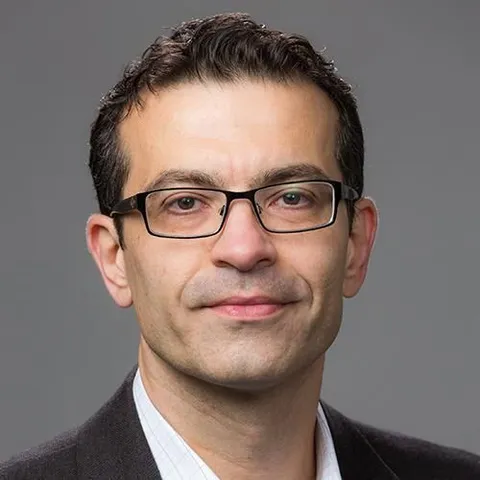
Co-Director of the Duke Regeneration Center
As of 2021 · Last known relationship
Nenad Bursac is a Duke biomedical engineering faculty leader whose work connects cardiac electrophysiology, tissue engineering, stem-cell therapies, and gene-based approaches to heart and muscle regeneration. His research includes engineered cardiac and skeletal muscle, organ-on-chip disease models, and regenerative therapies studied in small and large animal models. At Duke, he has served as Professor of Biomedical Engineering since 2016, Associate Professor in Medicine since 2011, Professor in Cell Biology since 2016, a Duke Cancer Institute member since 2015, and Co-Director of the Duke Regeneration Center since 2021. He earned a B.S.E. from the University of Belgrade in 1994 and a Ph.D. from Boston University in 2000. His interests include engineered heart patches, cardiac gene therapy, and models of muscular dystrophy, Pompe disease, dysferlinopathies, and cardiomyopathies.
Each topic is linked to its supporting source in Sources.
Training includes Ph.D at Boston University, B.S.E at University of Belgrade (Serbia), Co-Director of the Duke Regeneration Center, and Co-Director of the Duke Regeneration Center in the School of Medicine, plus 10 more records.
Explore education and trainingAs of 2000
As of 2000
As of 1994
As of 2021
As of 2021
As of 2016
As of 2016
As of 2016
As of 2016
As of 2015
As of 2015
As of 2014
As of 2011
As of 2011
Developing gene therapy approaches intended to repair or strengthen heart tissue damaged by heart attacks[11]
Engineered tissue models of Duchenne muscular dystrophy, Pompe disease, dysferlinopathies, and cardiomyopathies[8]
Growing beating human heart tissue and developing engineered heart patches to test therapies for heart attack damage[12]
Organ-on-chip and tissue-engineering technologies for disease modeling and therapeutic screening[8]
Using stem cells to create new muscles from scratch and studying muscle recovery from injury[8]