Research interests
ARDS, respiratory failure, mechanical ventilation, sepsis[2]
Columbia University Irving Medical Center
2019 to 2023 · Last known relationship
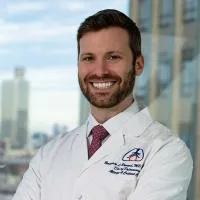
Benjamin Lewis Ranard is a pulmonary and critical care physician, Assistant Professor of Medicine and Deputy Director of the Center for Patient Safety Science at Columbia University Irving Medical Center, where he also co-chairs the NewYork-Presbyterian Sepsis Committee and is Associate Program Director of Columbia's Patient Safety and Health Services Research fellowship. He studied at Cornell, earned an MD and a Master of Science in Health Policy Research at Penn, trained in internal medicine at Duke and completed the Columbia PCCM fellowship (2019–2023) as chief fellow, with a fellowship project on EHR optimization, clinical decision support and sepsis quality measurement. His research builds learning-health-system tools: he is first author of the protocol for the SEPTIC pragmatic factorial trial of EHR sepsis alerts across NYP hospitals, of COVID-19 endotype and immune-modeling papers with Columbia neurocritical care and NIH collaborators, and of an editorial on minimizing bias in critical-care AI, and second author of the JAMA Internal Medicine report on awake prone positioning in COVID-19. Earlier Penn work on crowdsourcing and Yelp hospital reviews remains highly cited. Honors include Columbia's Clinical Trialist Early Career Development Scholars Award and NYP's Silverman Fellowship in Healthcare Innovation.
Each topic is linked to its supporting source in Sources.
Training includes Columbia University Irving Medical Center, Duke University, Cornell University, and Perelman School of Medicine, University of Pennsylvania, plus 7 more records.
Explore education and training2019 to 2023
ARDS, respiratory failure, mechanical ventilation, sepsis[2]
Clinical decision support systems; informatics / health information technology[2]
Learning health systems[2]
Predictive models and artificial intelligence in critical care[2]
Sepsis; patient safety; quality improvement[2]