Research interests
He is interested in improving LVAD durability and size and in clinical trials directed toward fully implantable, less intrusive devices.[5]
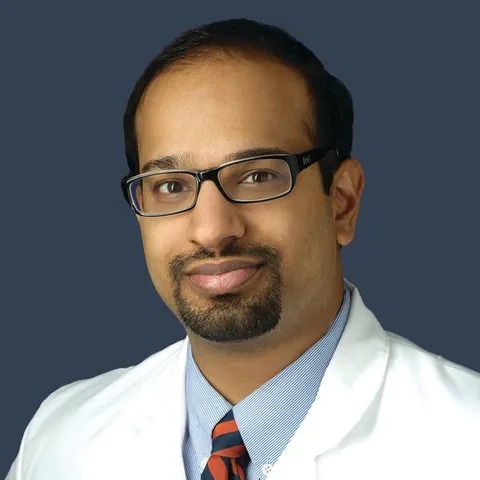
Ajay Kadakkal, MD is a heart-failure and transplant cardiologist whose work combines advanced clinical care, mechanical circulatory support, and research on difficult-to-diagnose cardiac conditions. He is listed as faculty in MedStar’s Heart Failure & Transplant Service and as an advanced heart failure specialist at MedStar Washington Hospital Center’s Heart and Vascular Institute. His clinical focus includes advanced and congestive heart failure, transplantation, LVAD support, cardiac amyloidosis, and sarcoidosis. He earned his medical degree from the University of Virginia in 2009, completed internal medicine residency and cardiovascular disease fellowship at UPMC from 2009 to 2016, and completed advanced heart failure and transplant cardiology fellowship at Stanford from 2016 to 2017. His stated care philosophy emphasizes evidence-based technology, patient education, listening, and goal-concordant care.
His stated care philosophy emphasizes evidence-based technology, clear patient education, goal-concordant treatment, listening, and holistic compassionate care.
Each topic is linked to its supporting source in Sources.
Training includes Ajay Kadakkal completed an Advanced Heart Failure and Transplant Cardiology fellowship at Stanford Health Care-Sponsored Stanford University from 2016 to 2017., Ajay Kadakkal completed a Cardiovascular Disease fellowship at UPMC Medical Education from 2013 to 2016., Ajay Kadakkal completed an Internal Medicine residency at UPMC Medical Education from 2009 to 2012., and Ajay Kadakkal received his medical degree from the University of Virginia School of Medicine in 2009., plus 5 more records.
Explore education and trainingAs of 2026
As of 2017
As of 2016
As of 2012
As of 2009
He is interested in improving LVAD durability and size and in clinical trials directed toward fully implantable, less intrusive devices.[5]
He participates in clinical-trial research on mechanical circulatory support and in a database examining treatment-related hemodynamics in sarcoidosis and amyloidosis.[5]