UPMC Medical Education Vascular Neurology
Fellowship · Pittsburgh, PA
Sponsored by UPMC Medical Education · Director Matthew Starr
Fellowship · Pittsburgh, PA
Sponsored by UPMC Medical Education · Director Matthew Starr
Director, Stroke Fellowship
Neurologist, Associate Professor of Neurology at UPMC Medical Education
Associate Director, Neuroendovascular & Stroke Fellowships · Papers with 2 fellows since 2023
Neurologist, Associate Professor of Neurology and Neurosurgery at UPMC Medical Education
Director, UPMC Stroke Institute; Leads Division of Cerebrovascular Medicine · Papers with 2 fellows since 2023
Neurologist, Endowed Professor of Neurology and Neurosurgery at UPMC Medical Education
Fellowship Program Coordinator
Abigail Biery is a fellowship program coordinator at UPMC for the Endovascular/Interventional Neurology, Movement Disorders, and Karp Neuro-Oncology fellowships. She is also the contact for training verification for the Endovascular/Interventional Neurology, Movement Disorders, and Multiple Sclerosis fellowships.
Associate Director, Neuroendovascular Fellowship
Alhamza R. Al-Bayati earned his medical degree at the University of Baghdad, completed neurology residency at Loma Linda University Health, and trained in vascular neurology at Pittsburgh and interventional neuroradiology at Emory. He is an associate professor of neurology and neurosurgery at the University of Pittsburgh and an interventional neurologist at UPMC. His work addresses adult and pediatric cerebrovascular disease and endovascular stroke treatment. He also serves as national co-chair of the Society of Vascular and Interventional Neurology Registry.
Endovascular techniques and real-world cerebrovascular outcomes, Adult and pediatric stroke and cerebrovascular care
Fellowship Program Manager / Fellowship Coordinator
Audrey Rohe is a fellowship program manager for neurology training programs at UPMC and the University of Pittsburgh. She is listed as a coordinator for clinical neurophysiology, epilepsy and women's neurology fellowship applications.
Faculty
Neurosurgeon, Associate Professor at UPMC Medical Education
Intracranial aneurysms; arteriovenous malformations; arteriovenous fistulas; intracranial stenosis; venous sinus stenosis; ischemic stroke.
Program Director, Endovascular Neurosurgery/Interventional Neurology Fellowship
Bradley Gross earned his medical degree at Northwestern University, completed neurosurgical training at Brigham and Women’s Hospital, Boston Children’s Hospital and Harvard Medical School, and trained in endovascular neurosurgery at Barrow Neurological Institute. He is an associate professor of neurological surgery at the University of Pittsburgh and directs endovascular neurosurgery at UPMC. His research addresses aneurysm treatment, embolization for chronic subdural hematoma and acute stroke reperfusion. He also directs the endovascular neurosurgery and interventional neurology fellowship.
Endovascular treatment of intracranial aneurysms, Middle meningeal artery embolization for chronic subdural hematoma, Endovascular reperfusion for acute ischemic stroke, Dural arteriovenous fistulas
PhD UPMC Altoona
Neurologist, Associate Professor of Neurology at UPMC Medical Education
Chief of Neurology
Cynthia Kenmuir earned a BS at Baldwin-Wallace College and an MD and PhD at the University of Toledo College of Medicine. She completed an internal medicine internship, neurology residency, and vascular neurology and neuroendovascular fellowships at UPMC. She is an associate professor of neurology at the University of Pittsburgh and chief of neurology at UPMC Altoona, where she directs the stroke and neurointerventional programs. She became a fellow of the Society of Vascular and Interventional Neurology in 2022.
Faculty
Neurologist, Assistant Professor of Pediatrics and Neurology at UPMC Medical Education
Pediatric stroke, Pediatric neurology
Associate Program Director, Child Neurology Residency Training Program
Elissa Katherine Ortolani earned her MD at the University at Buffalo and completed child neurology residency and vascular neurology fellowship training in Pittsburgh. She is an assistant professor of pediatrics and neurology at the University of Pittsburgh School of Medicine and co-directs the Pediatric Stroke Program at UPMC Children’s Hospital of Pittsburgh. Her work centers on childhood stroke, pediatric vascular disease and the transition of young patients to adult stroke care. She also serves as associate program director of the child neurology residency.
Childhood stroke and pediatric vascular disease, Transition from pediatric to adult stroke care and stroke in young adults, Pediatric neurology
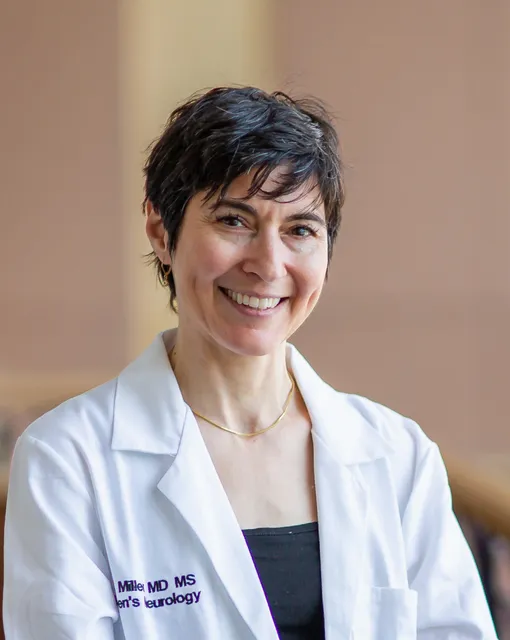
Chief, Division of Women’s Neurology
Eliza Miller earned her medical degree at Columbia University and completed neurology residency and vascular neurology fellowship training at New York-Presbyterian/Columbia. She is an associate professor of neurology at the University of Pittsburgh, chief of its Division of Women’s Neurology, and a vascular neurologist at UPMC. Her research examines cerebrovascular complications of pregnancy and long-term maternal brain health after adverse pregnancy outcomes. She founded Columbia’s Mothers Center Neurovascular Clinic and leads the Miller Lab at Pittsburgh.
Cerebrovascular complications of preeclampsia and adverse pregnancy outcomes, Long-term maternal brain health after adverse pregnancy outcomes
Assistant Professor of Neurology
Jussie Correia Lima earned his medical degree in Brazil, completed neurology residency and vascular neurology fellowship training at the University of Connecticut, and then trained in interventional neuroradiology at Hartford Hospital. He is an assistant professor of neurology at the University of Pittsburgh and works in vascular and interventional neurology with the UPMC Stroke Institute. His interests include acute ischemic stroke intervention and arterial disease; he is principal investigator of the RESPECT-ETB stroke study.
Acute ischemic stroke intervention and treatment, Carotid, vertebral and intracranial arterial disease
Faculty
Neurologist, Assistant Professor of Neurology at UPMC Medical Education
Neuro vascular and Neurology interventional; acute ischemic stroke intervention; carotid and vertebral arteries disease; intracranial atherosclerotic disease.
Stroke (Vascular Neurology) Fellowship
Keelin Moehl studied at the University of Pittsburgh School of Medicine and is listed as a 2026–27 fellow in its Stroke (Vascular Neurology) Fellowship. Her medical-student research examined whether intraoperative neurophysiological monitoring could help predict transient ischemic attack after carotid endarterectomy. A manuscript on the project listed her as first author and was submitted to Clinical Neurophysiology.
Intraoperative neurophysiological monitoring and transient ischemic attack after carotid endarterectomy
Professor of Neurology
Lawrence R. Wechsler earned an AB in biology at Harvard College and an MD at the University of Pennsylvania. After an internal medicine internship at Presbyterian University Hospital, he trained in neurology, clinical neurophysiology and stroke care at Massachusetts General Hospital. He is a professor of neurology at the University of Pittsburgh and is listed among the core faculty of its Cerebrovascular Medicine division. His published work includes articles on teleneurology and reperfusion therapy. He received the University of Pittsburgh’s McEllroy Award.
Associate Director of Clinical Research
Marcelo Rocha earned his MD and PhD at Rutgers Robert Wood Johnson Medical School and completed internal medicine and neurology residencies at Massachusetts General Hospital and Brigham and Women’s Hospital. He is an assistant professor of neurology at the University of Pittsburgh and associate director of clinical research at the UPMC Stroke Institute. His research examines stroke pathophysiology, biomarkers and neuroprotection, including why patients differ in their tolerance of stroke and aging. He also directs the institute’s Cerebrovascular Ultrasound Laboratory.
Stroke pathophysiology and differential tolerance to stroke and aging, Precision medicine biomarkers in stroke, Neuroprotection after stroke
Faculty
Neurologist, Assistant Professor of Neurology at UPMC Medical Education
Acute stroke diagnostics and management, cerebrovascular hemodynamics, neurosonology, Stroke pathophysiology, precision medicine biomarkers, neuroprotection
Director, Vascular Neurology Fellowship
Matthew T. Starr earned his MD at the University of New Mexico School of Medicine, then completed neurology residency and vascular neurology fellowship at UPMC. He is an associate professor of neurology at the University of Pittsburgh, a stroke neurologist, and director of its vascular neurology fellowship. His clinical and research work centers on cardioembolic and cryptogenic stroke, including identifying stroke causes and guiding prevention. He also directs stroke services at UPMC Shadyside and the thrombectomy-capable stroke center at UPMC Mercy.
Cardioembolic and cryptogenic stroke
Medical Director of Neurosonology Lab
Mausaminben Hathidara earned her MD at B. J. Medical College in Ahmedabad, completed neurology residency at the University of Oklahoma Health Science Center and trained in vascular neurology at the University of Miami and Jackson Memorial Hospital. She is a clinical assistant professor of neurology and a vascular neurologist at UPMC Altoona, where she directs the Neurosonology Lab and the Altoona neurology clerkship. Her research interests include acute ischemic stroke treatment, secondary stroke prevention and intracerebral hemorrhage. She received two clinical teaching awards in 2026.
Acute ischemic stroke treatment, Secondary stroke prevention, Intracerebral hemorrhage