Cardiovascular Disease Fellowshiproster verified
Current fellows, where they trained, and the research they've published.
Training and applying
The clinical track emphasizes clinical cardiology, innovation and quality improvement. The traditional academic route offers research-oriented training. Penn describes a minimum three-year general fellowship, with total training potentially extending for research or further subspecialization. Confirm the duration and funding of your intended pathway.
Published guidance checked September 2026; no cycle specified. Reviewed · Review due .
The primary sites are HUP, Penn Presbyterian and the Philadelphia VA. Rotations include consults, cardiac intensive care, catheterization, electrophysiology and imaging. Adult congenital heart disease consultations also include CHOP. These are program-specific rotations, not a list of every Penn-owned hospital.
Published guidance checked September 2026; no cycle specified. Reviewed · Review due .
Penn describes a Fellows' Innovation Fund with statistical support for faculty-mentored projects, cardiovascular informatics resources and access to structured research training. These supports are more actionable than an institution-wide funding total. Specific mentors, funding eligibility and protected time still need confirmation.
Published guidance checked September 2026; no cycle specified. Reviewed · Review due .
The program uses ERAS and the National Medical Specialties Matching Program. Its published checklist includes a CV, personal statement and three references, one from the current program director. The page does not identify an application year, so confirm the current cycle's dates and complete requirements with the program before relying on its timeline.
Published guidance checked September 2026; no cycle specified. Reviewed · Review due .
Current trainees' backgrounds
Prior training and attributable research in this roster. These describe the people represented here, not selection criteria or your chance of matching.
Publications dated before each trainee's start year (median, with interquartile range). Attribution is conservative; treat these as floors, not ceilings.
where they came from · 15+ schools across 33 trainees
- Perelman School of Medicine, University of Pennsylvania6 · 18%
- Johns Hopkins University3 · 9%
- Rutgers NJ Medical School2 · 6%
- Chicago Medical School1 · 3%
- Cooper Medical School of Rowan University1 · 3%
- Duke University1 · 3%
- Duke University School of Medicine1 · 3%
- Howard University College of Medicine1 · 3%
- Icahn School of Medicine at Mt. Sinai1 · 3%
- Louisiana State University School of Medicine1 · 3%
- Northwestern University Feinberg School of Medicine1 · 3%
- NY Med College1 · 3%
- Philadelphia College of Osteopathic Medicine1 · 3%
- State University of NY at Stony Brook School of Medicine1 · 3%
- SUNY Upstate Medical University1 · 3%
Research during training
10 of 33 current trainees with a known start year have published since starting. Cohorts are mid-training and attribution is conservative. This is a floor on the program's research environment, not a verdict.
Current cohort 33
Current cohort table. Scroll horizontally for all columns.
| Name | Med school | Year | Pubs | RCR |
|---|---|---|---|---|
 Dylan EigerMD/PHD Dylan EigerMD/PHD | Duke University | 1st Year Fellows | 20 | 2.60 |
| Johns Hopkins University | 1st Year Fellows | 5 | 1.63 | |
| University of Virginia School of Medicine | 1st Year Fellows | 3 | 1.76 | |
| NY Med College | 1st Year Fellows | 2 | 0.46 | |
 Austin TrianaMD/MBA Austin TrianaMD/MBA | Vanderbilt University | 1st Year Fellows | 1 | 1.57 |
| Philadelphia College of Osteopathic Medicine | 1st Year Fellows | 1 | 0.26 | |
| Rutgers NJ Medical School | 1st Year Fellows | n/a | n/a | |
| University of Florida | 1st Year Fellows | n/a | n/a | |
| Johns Hopkins University | 1st Year Fellows | n/a | n/a | |
| University of Pittsburgh School of Medicine | 1st Year Fellows | n/a | n/a | |
| Northwestern University Feinberg School of Medicine | 1st Year Fellows | n/a | n/a | |
| Yale University School of Medicine | 1st Year Fellows | n/a | n/a | |
| Perelman School of Medicine, University of Pennsylvania | 2nd Year Fellows | 5 | 0.00 | |
 James SchurrMD/PHARMD James SchurrMD/PHARMD | State University of NY at Stony Brook School of Medicine | 2nd Year Fellows | 5 | 0.36 |
| Perelman School of Medicine, University of Pennsylvania | 2nd Year Fellows | 1 | n/a | |
| Duke University School of Medicine | 2nd Year Fellows | n/a | n/a | |
 Anthony R. AngueiraMD/PHD Anthony R. AngueiraMD/PHD | Perelman School of Medicine, University of Pennsylvania | 2nd Year Fellows | n/a | n/a |
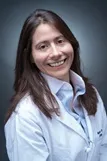 Monique M. MonitaMD/MPH Monique M. MonitaMD/MPH | SUNY Upstate Medical University | 2nd Year Fellows | n/a | n/a |
| Rutgers NJ Medical School | 2nd Year Fellows | n/a | n/a | |
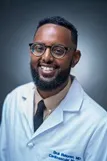 Bruk MekonenMD/MS Bruk MekonenMD/MS | Howard University College of Medicine | 2nd Year Fellows | n/a | n/a |
| Chicago Medical School | 2nd Year Fellows | n/a | n/a | |
| Icahn School of Medicine at Mt. Sinai | 2nd Year Fellows | n/a | n/a | |
| Yale School of Medicine | 3rd Year Fellows | 5 | 0.75 | |
| Perelman School of Medicine, University of Pennsylvania | 3rd Year Fellows | 4 | 0.30 | |
| Johns Hopkins University | 3rd Year Fellows | 3 | 0.55 |
Known alumni 13
Christopher M. Kramer · Christopher F. Liu · Richard B. Devereux · Vinay Kini · Vivek Kulkarni, MD, MHS, EdM · Phillip Koren, MD, FACC, FSCAI · Jonathan Menachem · Sam A. Buffer, Jr. · Michael Parker Ayers · Anjali Vaidya · Jeanine E. Romanelli · Vorovich, Esther E · Joshua Moss
Compiled from public program rosters and open scholarly data (PubMed, OpenAlex, ORCID) with field-normalized impact (NIH iCite RCR). Research figures reflect publicly attributable work.